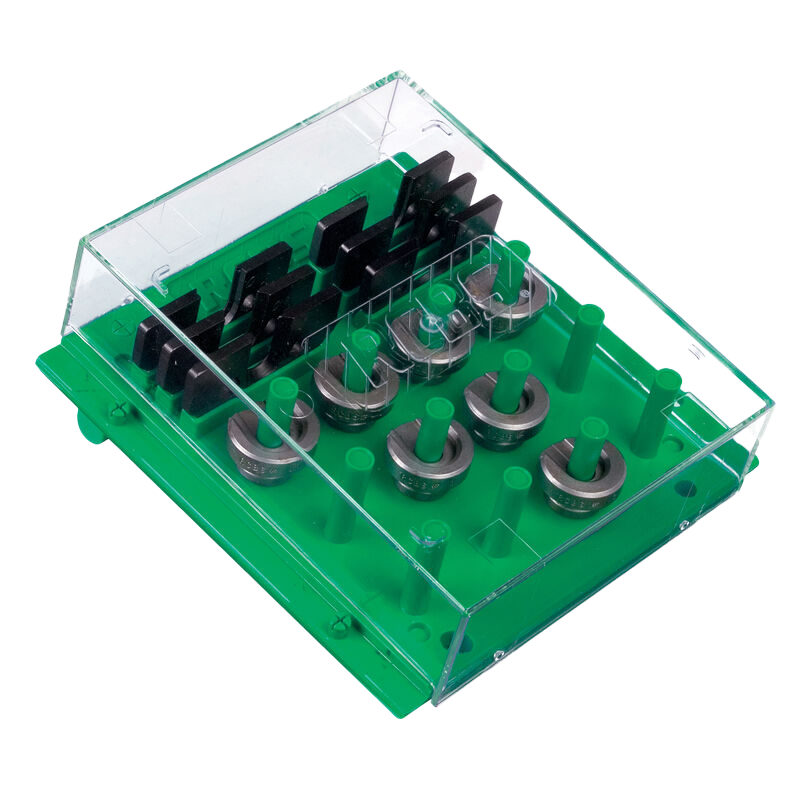
Keep your shell holders organized and protected with the RCBS Shell Holder Rack. This rack features 12 positions and can hold two shell holders on each post, allowing you to easily keep your shell holders in order. With a sturdy construction and durable materials, the RCBS Shell Holder Rack is built to withstand the rigors of reloading. Don't settle for a disorganized workbench – choose the RCBS Shell Holder Rack for a more efficient and productive reloading process.
With the RCBS Shell Holder Rack, reloaders can keep shell holders organized and protected. The Shell Holder Rack has 12 positions that hold two shell holders on each post. There is also room to store six Trim Pro Shell Holders as well. The clear cover keeps out the dust and dirt while allowing reloaders to see what is stored in the rack. The Shell Holder Rack can be mounted on the wall or used on the bench. The wall mount spacing allows it to be hung off of standard 1-inch pegboard hooks as well. The support legs angle the bottom out for wall mounting or the top up for bench use. Additional Shell Holder Racks can be snapped together if more shell holder storage is needed.
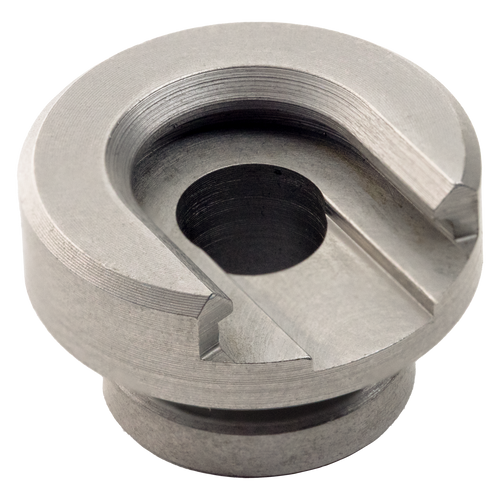
- Works with all RCBS single stage shell holders
- Works with Trim Pro shell holders
- Also works with RCBS neck bushings .255" or larger.
- Can be wall or bench mounted
- Can combine two or more when it's time to expand

WARNING: This product can expose you to chemicals including lead, which is known to the State of California to cause cancer and birth defects or other reproductive harm. For more information, go to www.p65warnings.ca.gov.
3-Die Neck Taper Crimp - FAQ's
What does the RCBS 7mm Backcountry Die Set include?
• Neck Sizer Die – Resizes only the case neck, leaving the body at fired dimensions. Due to the durable nature of the Peak Alloy™ case, neck sizing is preferable to full length sizing.
• Expander Die – Gently bells the case mouth to allow smooth bullet seating without abrading or damaging the bullet jacket or the nickel plating on the Peak Alloy™ case.
• Bullet Seating Die – Seats bullets to the correct overall length (OAL) for the 7mm BC.
How do I reload the 7mm Backcountry?
a. Use only 7mm BC cases that are designated as reloadable by their manufacturer.
b. Inspect each case before reloading.
c. Discard any case showing cracks, splits, fractures, bulging, dents, deformation, flaking or peeling of the nickel plating or any other visible damage or wear.
2. Clean cases.
a. Remove fouling and debris using safe methods for nickel-plated cases.
b. Avoid harsh solvents, abrasive tumbling media or ultrasonic cleaning.
c. Do not deburr primer pocket.
d. Take care not to remove plating during cleaning.
3. Do not trim or deburr. If a case is too long for reloading, discard it.
4. Lubricate cases with a wax-based lubricant evenly to the outside of each case before resizing.
5. Neck size the case.
a. Run each lubricated case through the neck sizing die. Set the die per RCBS instructions before sizing.
6. Reprime the case.
7. Flare the case mouth.
a. Run primed case through the expander die to gently bell the case mouth. Apply only the minimum flare needed for the bullet to enter the case mouth without scraping the bullet jacket when the bullet is seated.
8. Charge the case. Use only verified, lab-tested 7mm BC load data.
a. Always follow published reloading data. Peak Alloy cases do not exhibit traditional pressure signs. Start at the published minimum load and work up in small increments. Never exceed the published maximum powder charge. Be mindful published data for the 7mm BC is high pressure loads for Peak Alloy cases only.
9. Seat the bullet.
a. Placing a bullet in the flared case mouth, press into the case with your seating die with one smooth continuous stroke to correct OAL specified in your load data. Do not stop partway and restart or seat with separate pushes.
10. Final inspection of loaded rounds.
a. Verify OAL
b. Confirm bullet seated correctly (straight)
c. Confirm primer properly seated (flush or slightly below case head)
d. No damage to case body, neck, mouth or case’s nickel plating
11. Store ammunition properly
a. Store finished 7mm Backcountry ammo in a cool, dry location away from heat, moisture, direct sunlight and extreme temperature swings. High-pressure cartridges may be more susceptible to degradation from improper storage conditions than traditional ammunition. Periodically inspect stored rounds and discard any showing signs of corrosion, case damage or primer deterioration before use.
Why does this die set use a neck sizer die instead of a full-length resizing die? Why does this die set have a separate expander die?
The 7mm BC uses a nickel-plated Peak Alloy™ case. Flaring the case mouth very slightly before seating the bullet prevents the bullet jacket from scraping or cutting into the nickel plating. Damaging the plating exposes the underlying alloy material to potential corrosion and weakens the case. The dedicated flare die controls this process precisely. Flare the case mouth only enough to allow smooth bullet entry—do not over-flare.
Additionally, unlike traditional brass cases with case mouths that can be slightly expanded to allow for bullet seating with an expander ball or similar process during resizing, the 7mm BC requires a dedicated expanding or flaring operation.
What cases can I reload with the RCBS 7mm Backcountry Die Set?
• Federal Premium Terminal Ascent® 7mm Backcountry ammunition
• Federal Premium Barnes® LRX 7mm Backcountry ammunition
• Federal Premium Berger® Elite Hunter 7mm Backcountry ammunition
• Remington Premier Long Range Speer® Impact 7mm Backcountry ammunition
Other 7mm BC ammunition offerings (such as Federal’s Fusion or Remington’s Core-Lokt) are not recommended for reloading by the manufacturer. These rounds are plated only on the exterior, and when the round is fired, the uncoated surface is exposed, introducing the risk of corrosion, particularly if the cases are washed prior to reloading.
Where do I find safe load data for the 7mm Backcountry?
Only use load data that has been specifically developed and laboratory-tested for the 7mm Backcountry with Peak Alloy™ cases. Because Peak Alloy™ cases do not exhibit traditional pressure signs, using unverified data creates a serious safety risk
Why can't I rely on traditional pressure signs when reloading the 7mm Backcountry?
Do I need to trim or deburr my 7mm Backcountry cases?
What lubricant should I use when sizing 7mm Backcountry cases?
How many times can I reload a Peak Alloy™ case?
What’s a quick checklist for reloading the 7mm Backcountry?
• Use only reloadable Peak Alloy™ cases from Federal Premium, (Terminal Ascent®, Barnes® LRX, Berger® Elite Hunter). Remington (Premier Long Range) or other manufacturers. Do not use brass or non-designated steel or alloy cases.
• Use only lab-tested, published load data specific to the 7mm Backcountry.
• Never exceed published maximum powder charges.
• Always start at the minimum (starting) load and work up carefully.
• Do not rely on traditional pressure signs—Peak Alloy™ cases may not exhibit them.
• Inspect every case before reloading. Discard any case showing cracking, bulging, deformation, or plating damage.
• Do not trim or deburr Peak Alloy™ cases.
• Use wax-based lubricants when sizing cases.
• Store loaded ammunition in a cool, dry environment and inspect periodically.